encontrado 187997 Resultados para archival images
lnfrPT
idALM3FJXPNW
Nome do arquivo3FJXPNW.jpg
Créditosteeve-x-art

idALM3FJYC1R
Nome do arquivo3FJYC1R.jpg
Créditothislife pictures

idALM3FJYC1N
Nome do arquivo3FJYC1N.jpg
Créditothislife pictures

idALM3FK04B7
Nome do arquivo3FK04B7.jpg
Créditothislife pictures

idALM3FJP8J1
Nome do arquivo3FJP8J1.jpg
Créditosteeve-x-art

idALM3FJP8J8
Nome do arquivo3FJP8J8.jpg
Créditosteeve-x-art

idALM3FJP8JG
Nome do arquivo3FJP8JG.jpg
Créditosteeve-x-art

idALM3FJN1CC
Nome do arquivo3FJN1CC.jpg
Créditothislife pictures

idALM3FJP8HY
Nome do arquivo3FJP8HY.jpg
Créditosteeve-x-art

idALM3FJP2F7
Nome do arquivo3FJP2F7.jpg
Créditothislife pictures

idALM3FJEA7K
Nome do arquivo3FJEA7K.jpg
CréditoZUMA Press, Inc.

idALM3FJH4BX
Nome do arquivo3FJH4BX.jpg
Créditosteeve-x-art
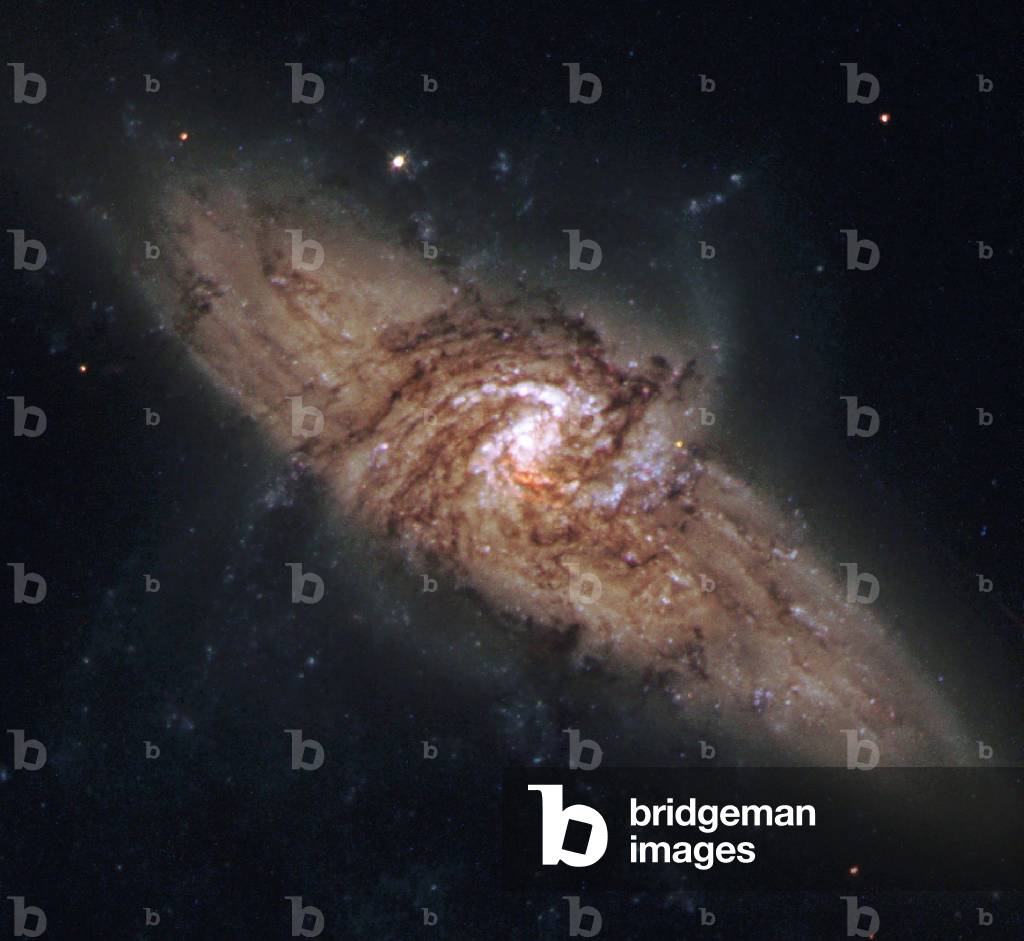
idBGM4610557
Nome do arquivo4610557.jpg
CréditoNOVAPIX (STEPHANE AUBIN)
Spiral galaxies NGC 3314 A and B in Hydra - Galaxy pair NGC 3314 in Hydra - NGC 3314 is a pair of spiral galaxies distant about 140 million years - Earth light. These galaxies are not interacting but just perfectly aligned in front of each other from Earth. Through an extraordinary chance alignment, a face - on spiral galaxy lies precisely in front of another larger spiral. This line - up provides us with the rare chance to visualize dark material within the front galaxy, seen only because it is silhouetted against the object behind it. NGC 3314 lies about 140 million light - years from Earth, in the direction of the southern hemisphere constellation Hydra. The bright blue stars forming a pinwheel shape near the center of the front galaxy have formed recently from interstellar gas and dust. In many galaxies, interstellar dust lies only in the same regions as recently formed blue stars. However, in the foreground galaxy, NGC 3314a, there are numerous additional dark dust lanes that are not associated with any bright young stars. A small, red patch near the center of the image is the bright nucleus of the background galaxy. It is reddened for the same reason the setting sun looks red. When light passes through a volume containing small particles (molecules in the Earth's atmosphere or interstellar dust particles in galaxies), its color becomes redder. The Hubble space telescope image of NGC 3314 was constructed from archival images taken in April 1999

idALM3FJBWNC
Nome do arquivo3FJBWNC.jpg
Créditothislife pictures

idBGM4564265
Nome do arquivo4564265.jpg
CréditoNOVAPIX (STEPHANE AUBIN)
Blue stragglers in cluster 47 Toucan - Blue stragglers in globular cluster 47 Tucanae - This image obtained by the Hubble space telescope shows a detail of the 47 Toucan cluster near its center (the field is indicated on the left image taken from the ground). The yellow circles on the right image indicate the position of stars identified by the telescope as blue trainers. Because of the high density of stars within a globular cluster, a collision between two stars sometimes occurs, merging into a single young, bright and warm star called a blue straggler. The core of globular cluster 47 Tucanae is home to many blue stragglers, rejuvenated stars that glow with the blue light of young stars. A ground - based telescope image (on the left) shows the entire crowded core of 47 Tucanae, located 15,000 light - years away in the constellation Tucana. Peering into the heart of the globular cluster's bright core, the Hubble Space Telescope's Wide Field and Planetary Camera 2 separated the dense clump of stars into many individual stars (image on right). Some of these stars shine with the light of old stars; others with the blue light of blue stragglers. The yellow circles in the Hubble telescope image highlight several of the club's blue stragglers. Astronomers theorize that blue stragglers are formed either by the slow merger of stars in a double - star system or by the collision of two unrelated stars. For the blue straggler in 47 Tucanae, astronomers favor the slow merger scenario. This photo is a three - color composite of Wide Field and Planetary Camera 2 archival images taken with ultraviolet, blue, and violet filters. Green, blue, and red colors were assigned to the filters and scaled so that the red giant stars appear orange, the main sequence stars are white/green, and the blue stragglers are appropriately blue. The ultraviolet images were taken on

idBGM4583187
Nome do arquivo4583187.jpg
CréditoNOVAPIX (STEPHANE AUBIN)

